Highlights:
– San Francisco Mayor Daniel Lurie calls for stricter regulations for autonomous vehicles after July 4 traffic debacle.
– Lurie cites incidents demonstrating the inadequacy of current regulations during major events.
– Proposed standards would ensure autonomous vehicles can operate efficiently, even amid crises.
Introduction to Autonomous Vehicles in Urban Landscapes
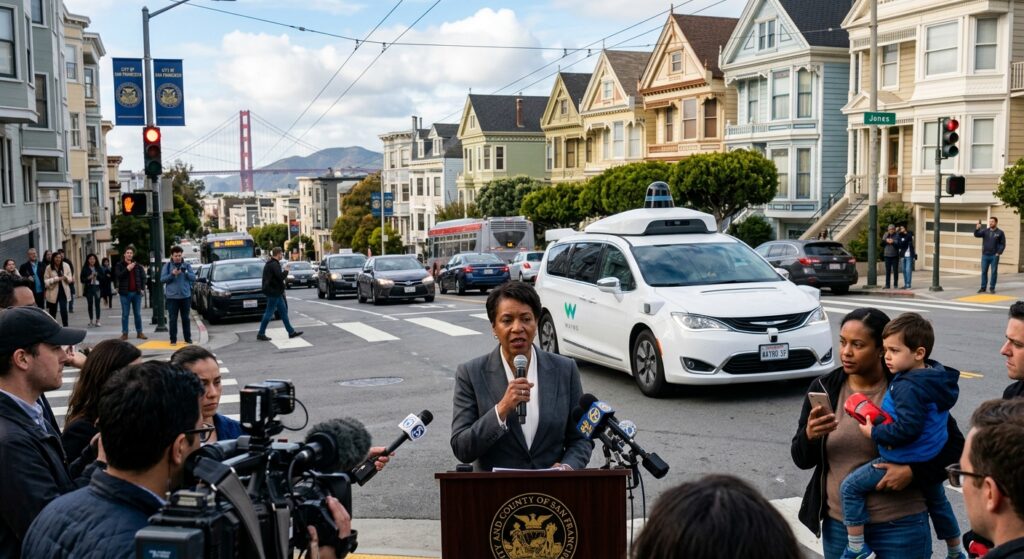
Autonomous vehicles have rapidly evolved from novel experiments to significant players in urban transportation. In cities like San Francisco, where innovation is met with high expectations, these vehicles not only promise convenience but also pose complex challenges. Recently, the mayor of San Francisco, Daniel Lurie, faced a critical moment that underscores the need for improved regulations, highlighting the tension between technological advancement and the realities of urban mobility.
Following significant incidents, particularly a severe traffic jam caused by Waymo robotaxis over the July 4 weekend, Lurie is advocating for the state Department of Transportation to implement stricter rules for the operation of these vehicles. This call to action is crucial, as the city grapples with the implications of technological integration into everyday life while ensuring public safety and efficiency.
Core Challenges with Autonomous Vehicle Regulations
The gridlock caused by the incapacitated Waymo vehicles serves as a wake-up call about the current regulatory framework governing autonomous travel. Lurie pointed out that two notable events—a widespread power outage and the massive influx of people during the Fourth of July fireworks—exposed significant unresolved issues within California’s policies. The mayor argues for the necessity of establishing clear operational abilities and real-time responsive protocols for companies deployed in urban environments.
In his communication with regulators, Lurie outlined four essential capabilities that autonomous vehicle operators should demonstrate. These include the ability to quickly relocate vehicles obstructing travel lanes, dynamically adjust routes based on real-time traffic conditions, and share critical operational data with local agencies. The proposal emphasizes accountability and responsiveness, which could significantly mitigate disruptions in the future.
Implications for the Future of Autonomous Transportation
As San Francisco positions itself at the forefront of autonomous vehicle innovation, the consequences of inaction are evident. The regulatory changes suggested by Mayor Lurie aim not to stifle technological progress but rather to reinforce the reliability of these services during peak times. By imposing stricter guidelines, the city hopes to create an environment where autonomous vehicles can thrive without compromising the connectivity of its transportation network.
The evolution of these regulations could signal a transformative chapter for urban mobility, balancing innovation with operational safety. Ensuring autonomous vehicles can seamlessly integrate into bustling city life may pave the way for wider adoption and public acceptance. However, this will require ongoing collaboration between technology companies, regulators, and the communities they serve.
In conclusion, San Francisco’s struggle to manage autonomous vehicle operations during peak events highlights the urgent need for updated regulations. As discussions unfold, what are the critical metrics that should determine automated vehicle performance during extraordinary situations? Can cities worldwide learn from San Francisco’s experience to shape their own regulations? How will these standards impact the trajectory of technological innovation in transportation?
Editorial content by Peyton Hawthorne