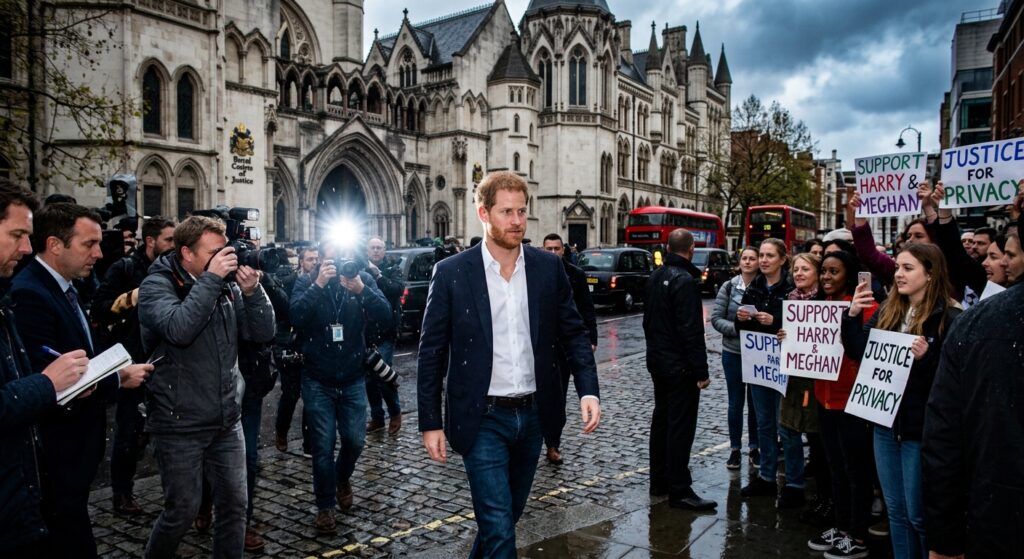
Highlights:
– Prince Harry returns to the UK for a week of engagements, primarily to support the Invictus Games.
– He faces a court ruling on allegations against Associated Newspapers regarding unlawful information gathering.
– The visit unfolds amid family security concerns and complications regarding accommodation at Buckingham Palace.
A Royal Return: Engaging with the Invictus Legacy
Prince Harry, the Duke of Sussex, has made a highly anticipated return to the UK, marking the start of a significant week filled with public engagements. His visit commences with a spotlight on the Invictus Games, a charity initiative close to his heart that champions injured military veterans. The importance of this event cannot be overstated; it serves not only as a platform for physical rehabilitation and sport but also as a testament to the resilience of those who have served their country.
As the royal proceeds with his itinerary, he faces personal and legal challenges that shape the context of his return. With his wife, Meghan Markle, and their children, Archie and Lilibet, remaining at home due to security concerns, the Duke will navigate this week of obligations solo. His engagements will spotlight his support for various charities, all while the UK public watches closely in anticipation of the court ruling linked to allegations against the press.
Legal Battles and Public Scrutiny
On Tuesday, the outcome of a critical court case against Associated Newspapers is set to unfold, where Prince Harry and other high-profile claimants—including Sir Elton John and Liz Hurley—have brought forward allegations of unlawful information gathering. Elements of this legal battle have reverberated through UK media, as the claimants assert that the newspapers violated privacy and trust in their pursuit of sensational stories. Associated Newspapers has firmly denied these accusations, raising questions about the ethics of modern journalism and its impact on personal lives.
This latest court case contributes to a broader narrative of Prince Harry’s ongoing confrontation with media organizations that he believes have engaged in dishonest practices. Earlier in 2023, he successfully pressed charges against Mirror Group Newspapers over similar allegations, and last year, a settlement with the publisher of the Sun resulted in significant damages and an apology for unlawful intrusion. The outcome of this case could ripple through both legal and media landscapes, with potential implications for future press practices and the privacy rights of public figures.
Implications and Moving Forward
As Prince Harry continues his public engagement efforts this week, the outcome of his court case could define not only his personal narrative but also influence policy around privacy in journalism. Should the court deliver a mixed verdict, it might signal a complex landscape where both sides claim victory, reiterating the pressing need for reform in how the media operates within the contours of privacy rights.
Further implications include added dialogue around the responsibilities of media outlets and the ethical boundaries they must navigate when reporting on the private lives of public figures. As Prince Harry advocates for transparency and accountability, this week’s events may spark further discussions on how society balances the right to know with the right to privacy.
In conclusion, Prince Harry’s return to the UK is enveloped in both celebratory engagements for his charitable work and the gravity of a pressing court case against a powerful media entity. What might be the consequences if the judge rules in favor of the alleged victims? How can the media reform its practices to better respect individual privacy while fulfilling its duty to inform the public? And, ultimately, what does this week signify for the future of the royal family’s relationship with the press?
Editorial content by Emerson Grey